Here’s a detailed 3-day Paris itinerary for a first-time visitor that covers the major sights without turning the trip into a race. I’ve grouped each day geographically so you minimize unnecessary Metro rides.
Day 1 — Historic Paris, the Louvre & the Seine

Start in the historic center and work west through some of Paris’s most famous sights.
8:00–9:00 AM — Breakfast in Saint-Germain or the Latin Quarter
Start with a relaxed Parisian breakfast: coffee, croissant, baguette with butter and jam, or an omelette if you want something substantial.
Aim to be near Île de la Cité by around 9:00 AM.
9:00–9:45 AM — Notre-Dame and Île de la Cité
Walk around Notre-Dame and the riverfront. Take time to see the cathedral exterior, the Seine, and the small streets around the island.
Then walk roughly 5–10 minutes to Sainte-Chapelle.
10:00–10:45 AM — Sainte-Chapelle
The upper chapel’s stained glass is the main reason to visit. You don’t need hours here; roughly 45 minutes is sufficient for most visitors.
Advance timed entry is a good idea. From April through September Sainte-Chapelle normally operates 9 AM–7 PM; from October through March it closes earlier at 5 PM. sainte-chapelle.fr
11:00 AM–12:00 PM — Walk through Saint-Germain-des-Prés
Cross to the Left Bank and wander through the Latin Quarter and Saint-Germain. Good streets and areas include Boulevard Saint-Germain, Rue de Buci and the streets around the historic cafés.
Stop for coffee if you like, but save your appetite for lunch.
12:00–1:15 PM — Parisian lunch
Try a classic bistro meal: French onion soup, steak-frites, duck confit, croque monsieur or a simple charcuterie-and-cheese plate.
Then walk across the Seine toward the Louvre.
1:30–4:30 PM — Louvre Museum
Give yourself around 3 hours rather than trying to see the entire museum.
A manageable first-visit route includes the Mona Lisa, Winged Victory of Samothrace, Venus de Milo, Napoleon III apartments and a few galleries that match your interests.
The Louvre is normally closed Tuesdays. It currently opens 9 AM–6 PM on Monday, Thursday, Saturday and Sunday and until 9 PM Wednesday and Friday. Le Louvre
Important: reserve a timed ticket in advance.
4:30–5:30 PM — Tuileries Garden
Exit the Louvre toward the Tuileries and slow the pace down.
Walk past the fountains and sculptures, grab a chair near one of the ponds and enjoy one of the most pleasant stretches of central Paris.
5:30–6:15 PM — Place de la Concorde
Continue west through the gardens toward Place de la Concorde.
From here you can see the beginning of the Champs-Élysées and, in the distance, the Arc de Triomphe.
6:30–8:00 PM — Dinner
Have dinner around the Madeleine, Saint-Germain or Palais Royal rather than on the most tourist-heavy part of the Champs-Élysées.
8:15–9:30 PM — Seine cruise
Finish your first day with an evening Seine cruise.
This is particularly good on your first night because you’ll see many landmarks you visited during the day from an entirely different perspective.
Depending on the season, book a departure around sunset or shortly after dark.
Day 1 walking: roughly 8–10 km.
Day 2 — Eiffel Tower, Impressionist Paris & the Arc de Triomphe
Today concentrates on western Paris.
8:00–9:00 AM — Breakfast
Have breakfast near your hotel, then head toward Trocadéro.
9:00–9:30 AM — Trocadéro
Start from Place du Trocadéro rather than directly beneath the Eiffel Tower.
It gives you one of the classic full-tower views.
Walk downhill through the gardens and across Pont d’Iéna.
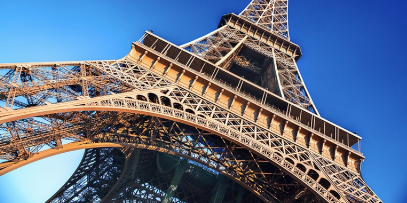
9:30–11:30 AM — Eiffel Tower
Historical landmark
Allow roughly two hours including security and elevators.
For a first visit, going to the summit is worthwhile if visibility is good. The second floor still offers superb views and can be enough if you’re uncomfortable with heights.
The Eiffel Tower’s official site publishes hours by individual date because they can vary. Around late September 2026, for example, operating hours were approximately 9:30 AM–11 PM. La tour Eiffel
Reserve your ticket as early as possible.
11:30 AM–12:00 PM — Champ de Mars
Walk through the park behind the tower.
This is another good photo angle and gives you a break from queues and crowds.
12:15–1:30 PM — Lunch
Head toward Rue Cler or Invalides.
Rue Cler is particularly convenient for cafés, bakeries, cheese shops and casual lunches.
1:45–2:30 PM — Seine walk and Pont Alexandre III
Walk toward Les Invalides and then Pont Alexandre III.
This ornate bridge offers excellent views toward both the Eiffel Tower and the Grand Palais.
2:45–5:00 PM — Musée d’Orsay
Art museum
If you like Monet, Renoir, Degas, Van Gogh or Impressionism, don’t skip this museum.
For many visitors, it is easier to enjoy in two hours than the Louvre because the collection is more manageable.
The museum is currently closed Mondays, open 9:30 AM–6 PM most other days and stays open until 9:45 PM on Thursdays. Musée d’Orsay
Don’t miss the giant clock overlooking Paris.
5:15–6:00 PM — Café break
Have coffee, hot chocolate, wine or pastries nearby.
Paris works much better when you intentionally leave time to sit rather than moving continuously between attractions.
6:00–7:00 PM — Champs-Élysées
Take the Metro toward the Champs-Élysées and walk west toward the Arc de Triomphe.
You don’t need to walk the entire avenue.
7:00–8:00 PM — Arc de Triomphe
Monument
Go to the top if you’re comfortable with stairs.
The view is particularly impressive around sunset because the avenues radiate outward from the monument and you get an excellent view toward the Eiffel Tower.
Use the underground passage to reach the monument rather than attempting to cross the roundabout.
8:15–10:00 PM — Dinner
Have dinner around the 8th arrondissement or take the Metro toward Saint-Germain, Le Marais or your hotel neighborhood.
If you still have energy, return toward Trocadéro afterward for nighttime Eiffel Tower photographs.
Day 2 walking: roughly 7–9 km.
Day 3 — Montmartre, Opéra & the Parisian neighborhood experience
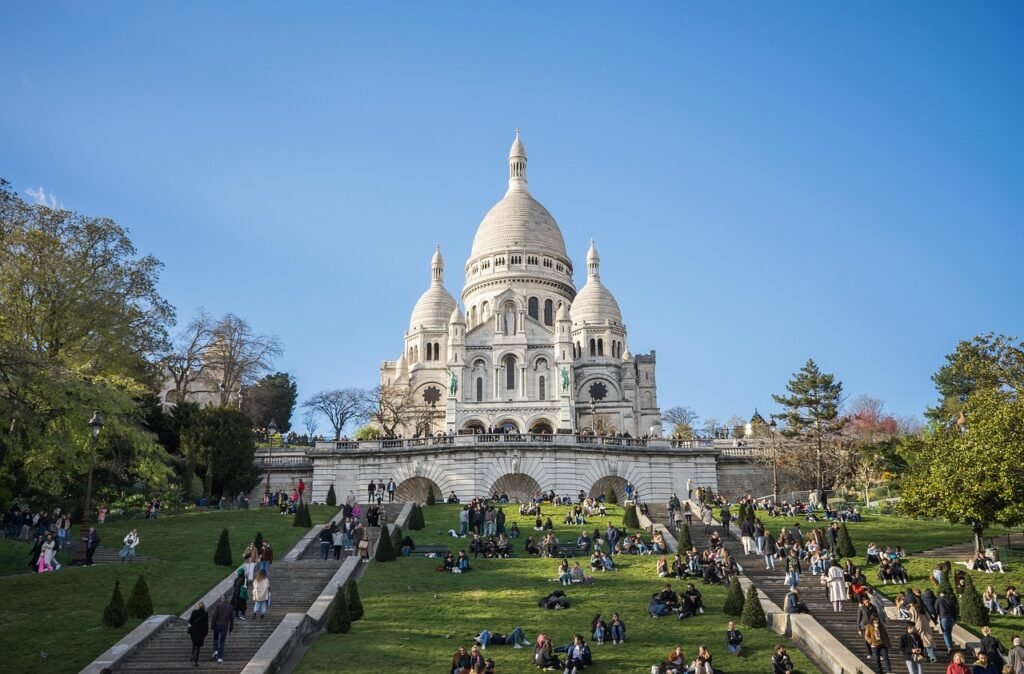
The third day should feel less museum-heavy and give you more time to enjoy actual neighborhoods.
8:00–8:45 AM — Breakfast
Head to Montmartre early, before the biggest crowds arrive.
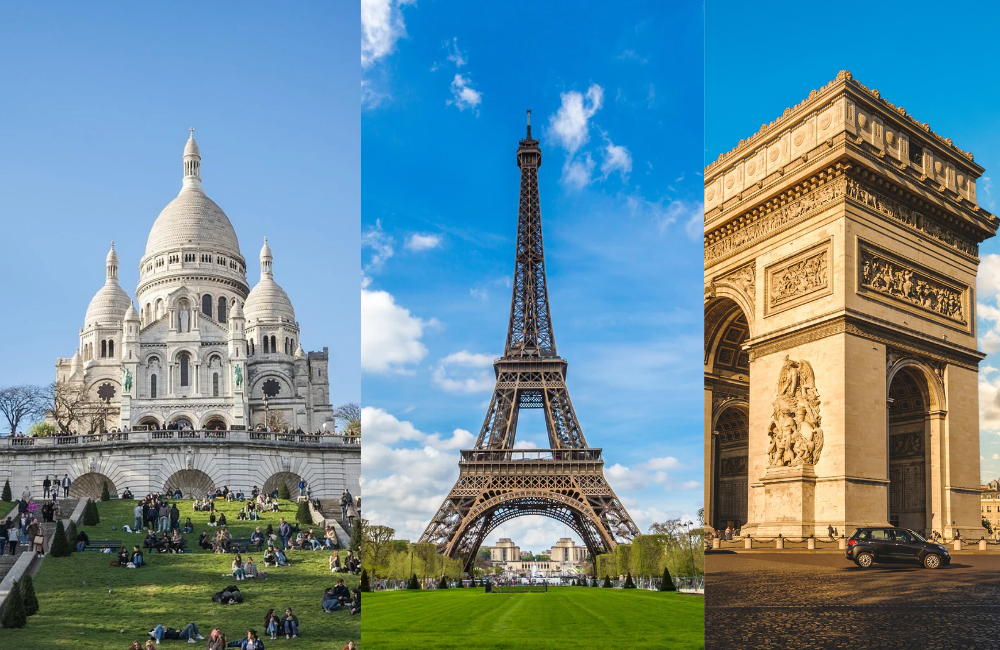
9:00–10:00 AM — Basilique du Sacré-Cœur de Montmartre
Basilica
Start at Sacré-Cœur.
The terrace in front of the basilica provides one of Paris’s classic panoramic views.
Go inside the basilica, then spend some time looking across the city.
10:00–11:30 AM — Explore Montmartre
Walk rather than follow a rigid route.
Good stops include Place du Tertre, Rue de l’Abreuvoir, Maison Rose, the vineyards of Montmartre and the neighborhood’s steep staircases and quiet side streets.
The trick is to move away from Place du Tertre periodically—the quieter residential streets are part of what makes Montmartre memorable.
11:30 AM–12:00 PM — Moulin Rouge
Walk downhill toward Pigalle and see the famous Moulin Rouge exterior.
You don’t need much time unless you’re attending an evening performance.
12:00–1:15 PM — Lunch in Montmartre
This is a good day for a longer lunch.
Look for a smaller neighborhood bistro rather than eating immediately around the Sacré-Cœur forecourt.
1:30–2:30 PM — Palais Garnier
Opera house
Take the Metro toward Opéra.
The grand staircase and interiors make Palais Garnier one of Paris’s most spectacular buildings.
Because it remains a working opera house, access to certain areas can occasionally be restricted for rehearsals or performances.
2:30–3:30 PM — Galeries Lafayette rooftop
Walk a few minutes to Boulevard Haussmann.
Browse the department stores and head to the rooftop terrace for another excellent view across Paris.
This is also a convenient opportunity for shopping.
3:45–5:30 PM — Le Marais
Take the Metro toward Le Marais and spend the afternoon wandering.
Explore around Place des Vosges, Rue des Rosiers, Rue des Francs-Bourgeois and the small surrounding streets.
This is one part of the trip where I wouldn’t schedule every 15 minutes.
Stop for pastries, falafel, coffee, shopping or simply people-watching.
5:30–6:15 PM — Place des Vosges
Take a break beneath the arcades or in the central square.
It is an ideal slower final stop after three busy sightseeing days.
6:30–8:30 PM — Final Paris dinner
For your last night, consider something more memorable than a quick café meal.
A traditional French dinner might include escargots, pâté or onion soup followed by duck, steak-frites or beef bourguignon, finishing with crème brûlée or tarte tatin.
9:00 PM onward — Final evening walk
Finish around the Seine.
Walk through Île Saint-Louis, past Notre-Dame and along the river toward Pont Neuf.
It’s a better final memory of Paris than squeezing another attraction into the schedule.
Reservations I would make before arriving
Book these first: Eiffel Tower, Louvre, and Sainte-Chapelle. I’d also reserve Musée d’Orsay if you’re visiting during a busy period. Seine cruises can usually be arranged more flexibly, though sunset departures are worth booking ahead.
One scheduling warning: the Louvre closes Tuesdays, while Musée d’Orsay closes Mondays. Le Louvre If your three days include either day, simply swap Day 1 and Day 2 as needed.
For transportation, expect to combine walking + Metro. Paris rewards walking, and many of the best moments—small bakeries, cafés, architectural details and river views—occur between the famous attractions rather than inside them.